
Carvana Was Going to Kill Dealerships. It Didn't.
Summary
When Carvana launched, the narrative was simple: the dealership is dead. Consumers would buy cars the way they buy everything else, from a website, without ever setting foot on a lot. That prediction has not held up. This post looks at what the data actually shows about how people buy cars today, why the preference for in-person buying has grown since COVID rather than shrunk, and what it means that Carvana itself is now buying physical dealerships. If you run a dealership and spent a few years wondering whether the future had passed you by, keep reading.
Introduction
In 2021, Carvana was worth $60 billion. Its CEO was on the covers of financial publications. Industry analysts were writing obituaries for the traditional dealership. The story made sense on the surface: consumers had spent two pandemic years doing everything online, car inventory was tight, and a company that let you buy a vehicle from your couch without talking to a salesperson looked like the inevitable future of auto retail.
A year later, the stock had lost 99% of its value. The company was carrying $7 billion in debt, burning through cash, and making headlines for all the wrong reasons.
The dealership? Still here. In fact, growing.
Here is what actually happened, and what the numbers say about where car buyers actually stand today.
What Carvana Promised
Carvana launched in 2012 with a clear premise: buy a used car online, get it delivered to your door, return it within seven days if you change your mind. No negotiating. No salespeople. No spending a Saturday afternoon on a lot.
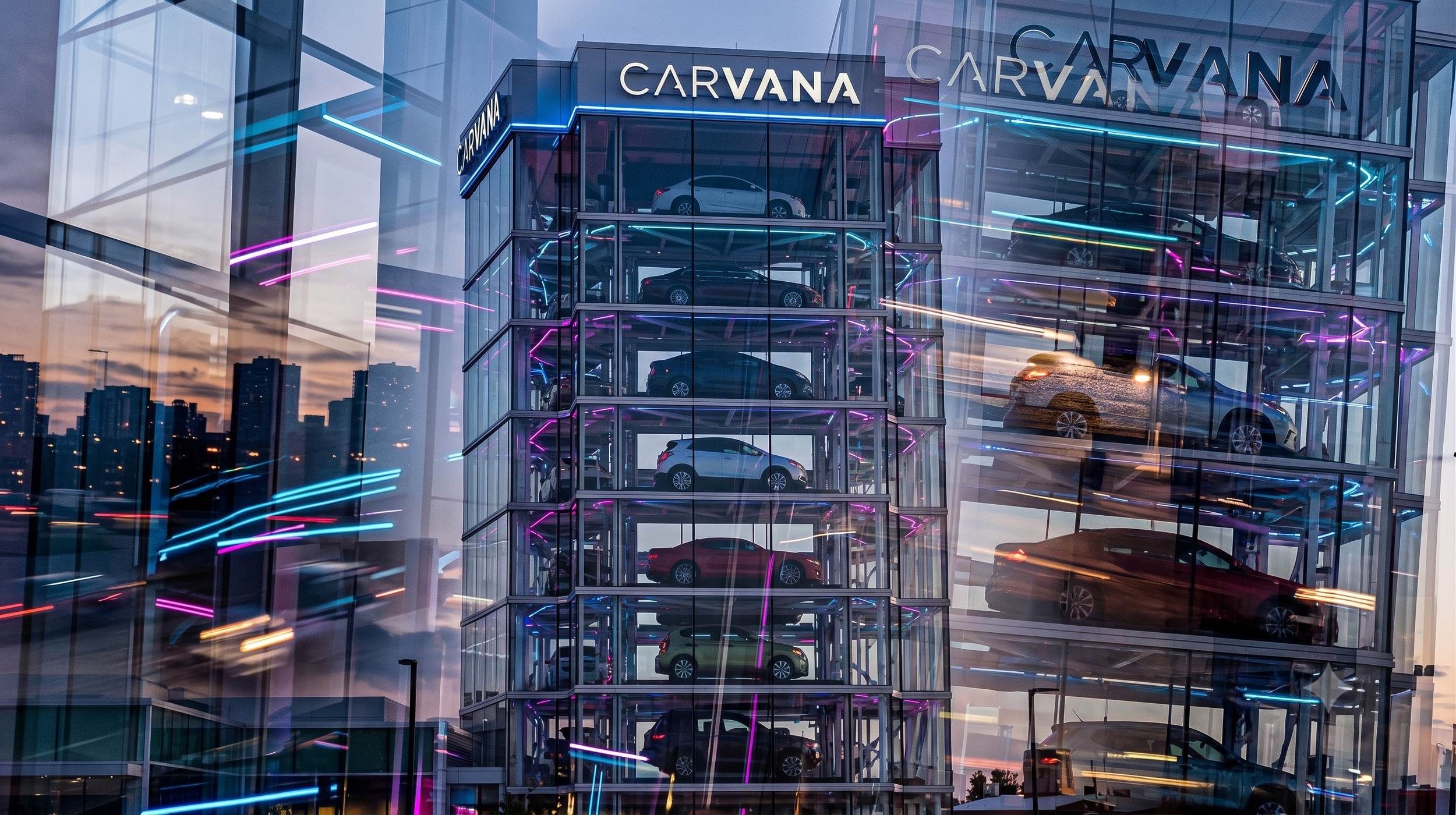
The company built car vending machines as physical installations, more for brand awareness than practical use. It expanded city by city. By 2021, it had sold more than 425,000 vehicles in a single year and was valued higher than some legacy automakers. The business press called it a disruptor. The dealership model, they said, was finished.
And for a moment, the pandemic made that prediction feel credible.
Then COVID Happened. Sort Of.
The pandemic of 2020 gave online car buying a genuine push. Showrooms closed. Inventory was scarce. Buyers who could not visit a lot in person turned to platforms like Carvana, and the company's revenue soared. The stock went vertical. It was the perfect proof point for the "dealerships are done" thesis.
What nobody was talking about was what would happen when the showrooms reopened.
As restrictions lifted, buyers came back to lots. Not just some buyers. Most of them.
What Buyers Actually Do: The Data
The research from the post-pandemic years tells a consistent story across every major study.
Cox Automotive's Car Buyer Journey Study found that 88% of car buyers saw the vehicle in person before purchasing.CDK Global's monthly scorecard, which tracked online car purchases over more than two years, found that the share of buyers who complete a purchase entirely online hovers near zero, rarely crossing 3%.
Those numbers alone should put the "Carvana is replacing dealers" narrative to rest. But the more telling shift is in the direction things are moving.
The preference for completing a test drive in person jumped from 42% in 2023 to 69% in 2024, according to CDK Global. That is a 27-percentage-point increase in a single year. More than three-quarters of buyers, 78%, said the test drive alone ultimately sold them on the vehicle they purchased. More than half, 54%, said the ability to test drive was the top reason they chose a dealership over an online option.
The preference for completing the entire purchase in person also moved. A 2025 study found that 61% of buyers favor buying in person, up from 54% in 2021. The pandemic did not permanently shift buyers toward digital-only purchases. It reminded many of them what they value about standing next to the vehicle before signing anything.
Pre-COVID, During COVID, and Now: A Clear Picture
Before 2020: Car buyers researched online but completed purchases in person. The test drive was considered essential. Digital tools were growing, but the dealership was where the deal got done.
During COVID (2020 to 2022): Online-only options gained real market share out of necessity. Carvana's revenue tripled. The narrative that dealerships were outdated felt, for a moment, supported by the data.
After COVID (2022 to now): Buyers came back to lots. The preference for seeing and driving a car before buying it did not just hold. It strengthened.CarGurus' 2024 Consumer Insight Report found that 86% of buyers still want to see a vehicle in person before purchasing. CDK Global found that 88% of car buyers conducted at least half of the car-buying process in person, a five-percentage-point increase from the prior year.
The pandemic was a detour, not a destination.
What Happened to Carvana
By late 2022, Carvana's stock had fallen from a high of $376 per share to around $3. The company had $7 billion in debt and was burning cash at a rate that alarmed investors. Its CEO later discussed thenear-bankruptcy experience publicly at a major financial conference, describing the lessons it forced the company to learn.
The business model ran into the wall the consumer data had always suggested. Selling cars without letting people drive them is a harder proposition than the initial hype made it seem. Return rates on Carvana vehicles ran higher than expected. Customer service complaints became public. The supply chain squeeze that had helped online sellers during the pandemic worked against Carvana when the market normalized and the company was sitting on expensive inventory at prices that no longer matched demand.
Carvana survived. It restructured its debt, cut more than $1 billion in annual expenses, and got profitable again. But it did not replace the dealership. Not even close.
And here is the part that says everything: Carvana is now buying physical dealerships.
The Part Nobody Expected
In 2026, Carvana spent over $160 million acquiring seven Stellantis dealerships.According to CNBC, the company is moving into new-car sales using those physical locations, testing a model where the transaction stays digital but the vehicle is available for customers to see and experience in person.
Read that again. The company that was supposed to make dealerships obsolete is now operating dealerships.
It is not a sign that Carvana is failing. The company is adapting, as good businesses do. But it is a clear signal from the market: buyers want what they want, and what they want includes the ability to see, touch, and drive the car before committing to one of the largest purchases they will make this year.
What This Actually Means for Dealers
The Carvana era taught the industry something worth keeping. Buyers do not want friction. They do not want to spend four hours at a desk going through finance paperwork. They do not want surprises about pricing. The parts of Carvana's pitch that actually resonated with consumers were never about buying without seeing the car. They were about transparency, simplicity, and pricing without games.
Dealers who absorbed those lessons, kept the test drive, and added strong digital tools for research and initial paperwork came out of this period in a better position than before.Urban Science reported that the U.S. dealership count actually increased in 2024, with a new post-pandemic high expected in 2025.
The dealerships are not just surviving. They are growing.
CarGurus research found that 71% of buyers prefer an approach that combines online research with in-person purchase, not one that replaces the dealership experience. The average car buyer in 2024 visitedfewer than two dealerships before purchasing, down from five or more a decade ago. They arrive more informed and more decided than ever. But they still arrive.
The dealers who win now are the ones who meet buyers where they are: great digital presence for the research phase, low-pressure and efficient showroom experience for the close. Not one or the other. Both.
Ready to Build a Dealership Marketing Strategy That Matches How Buyers Actually Shop?
If you run a dealership in Texas and want a marketing approach built around what buyers actually do rather than what people predicted they would do,Feyth Marketing can help. We build practical, local marketing strategies for Texas businesses. Schedule a free strategy session atfeythmarketing.com.
Frequently Asked Questions
-
Not exactly. The company came close to bankruptcy in 2022 and 2023, but restructured its debt and returned to profitability. What failed was the broader prediction that Carvana's model would replace traditional dealerships. The market did not move that way, and Carvana itself has since begun operating physical dealership locations.
-
Consistently less than 3%, according to CDK Global's two-year tracking study. Despite the growth in online research and digital tools, the vast majority of buyers still complete the purchase in person at a dealership.
-
Not in the way many predicted. While online research became nearly universal, the preference for in-person buying recovered strongly after the pandemic. The preference for conducting a test drive in person jumped from 42% to 69% between 2023 and 2024 alone.
-
The test drive remains the single most important step in the buying process for most shoppers. Over 78% of buyers say the test drive alone sold them on the vehicle they purchased. Buying a car is a large financial commitment, and most people want to experience the vehicle before signing anything.
-
The valid parts of Carvana's appeal were about reducing friction: transparent pricing, no-pressure environments, and a faster, cleaner process. Dealers who adopted those improvements while keeping what buyers actually want, which is the in-person experience, came out ahead. The lesson is not to ignore digital tools. It is to use them in a way that supports the showroom rather than replaces it.
-
Growing. Urban Science reported that the U.S. dealership count increased in 2024, with projected growth continuing into 2025. Buyer satisfaction with dealership experiences also reached an all-time high in 2024, according to Cox Automotive's annual study.
Conclusion
The prediction that Carvana would kill the dealership made for great headlines. It was compelling, it fit the trend lines of the moment, and it came with a founder who knew how to tell the story.
But the buyers never quite agreed with it.
They kept wanting to drive the car. They kept wanting to look someone in the eye before writing a check for twenty or thirty thousand dollars. And when the restrictions lifted and the lots reopened, they came back. In larger numbers and with higher satisfaction scores than before.
The dealership that thrived through this period understood something the disruption narrative missed: the problem was never that buyers wanted to go to a dealership. The problem was that the experience at too many dealerships was not worth the trip. Fix that, and the business model is sound.
Community trust, local presence, and a buying experience people actually enjoy: that is what wins. It always has been.
